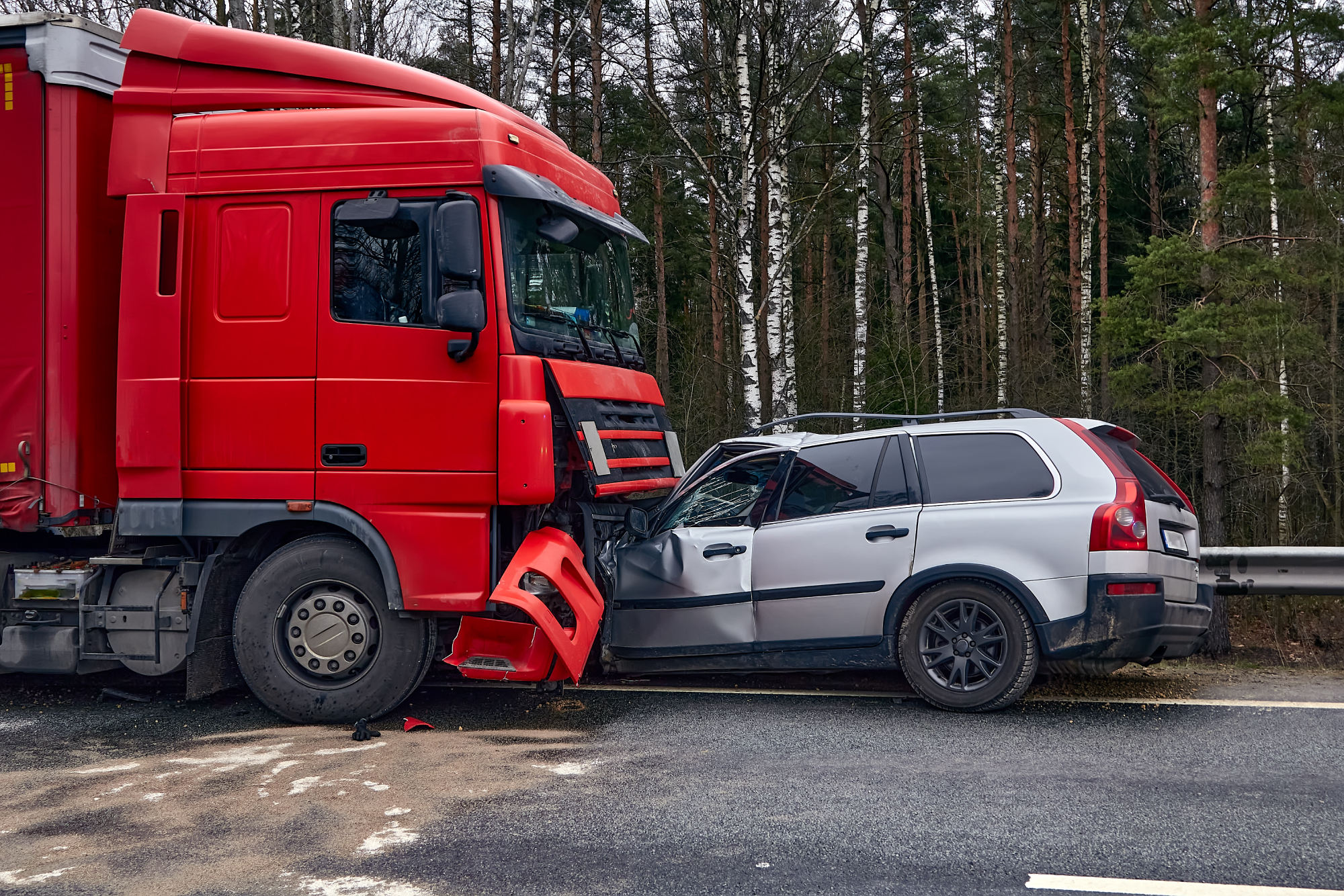
September 10th is World Suicide Prevention Day. Road safety is not just about speeding, drugs, seatbelts and paying attention. It is also about mental health and preventing suicide.
Not all traffic deaths are caused by an accident. Suicide prevention is also part of the work for safer roads and fewer lives lost.
In 2025, 656 suicides were initially registered in Norway. The number may also increase when the Norwegian Institute of Public Health has received more autopsy reports and quality-assured the statistics.
Behind every number is a person, a family, friends, colleagues and others who are affected. Some of the suicides occur in traffic – but it is difficult to know exactly how many.
When a traffic incident is not an accident
The Norwegian Public Roads Administration's accident analysis group investigates all fatal accidents on Norwegian roads. In some cases, suspicion arises that the incident was intentional.
In 2024, there were six fatal accidents. In the period 2015–2024, suicide was suspected in a total of 73 fatal accidents.
However, it is difficult to know how many suicides actually occur in traffic. Incidents that are considered suicides are not considered traffic accidents and are therefore not included in the usual accident statistics.
Difficult to determine the extent
Previous research has indicated that the number of suicides that actually occur in traffic may be underreported. Norwegian authorities are now working on more standardized national routines and criteria for distinguishing between suicides and accidents. The goal is, among other things, to obtain more precise figures and a better knowledge base for prevention.
The distinction between accident and suicide can be difficult to determine, and also affects how the death is recorded in statistics.
Can the traffic system help prevent suicide?
Road safety is often about reducing risk. Environmental measures can also contribute to suicide prevention. The Norwegian Directorate of Health points out that a suicidal impulse can be short-lived, and that limited access to methods, such as physical protection on bridges, can be an effective preventive measure.
The transport sector is also part of the authorities' work to prevent suicide. The government's action plan includes, among other things, mapping vulnerable areas and assessing safety measures on high bridges.
But prevention is about more than physical barriers. It's also about knowledge, about noticing people who are struggling, daring to ask questions, and knowing what to do when you're worried.
It's not dangerous to ask.
It can be difficult to ask someone directly if they are having suicidal thoughts. Many people are afraid of saying the wrong thing or making the situation worse.
Helsenorge writes that there is no evidence that asking about suicidal thoughts increases the risk of suicide. If you are concerned about someone, it may be important to get in touch. Listen to what the person says, take it seriously and help them get professional help if necessary.
Vision Zero is about people
Norway has a zero vision for fatalities and serious injuries in traffic. We also have a zero vision for suicide. The two areas have similarities that are perhaps not commonly thought of: Both are based on the fact that deaths are preventable.
On World Suicide Prevention Day, it is therefore natural to also focus attention on our roads. Road safety is ultimately about everyone getting home safely.
Do you or someone you know need help?
If there is an acute risk of suicide: Call 113.
You can also contact:
Mental Health: 116 123 (24 hours, free and anonymous)
Church SOS: 22 40 00 40
Emergency room: 116 117
If you are worried about someone, ask how they are really doing. You don't need to have all the answers to make a difference. For more information about other support services, see helsenorge.no.
Club sweaters, low membership fees and activity offers for people who need community. These are some of the things that the support from Safedrive Reward will contribute to at Ensjø in Oslo.
When the police experienced increasing speeding and reckless winter driving in the city center in 2021, they took the initiative for organized driving on the track. Safedrive supported the initiative from the beginning. This year, the success was repeated, and on Saturday, February 21, around a hundred car enthusiasts gathered in Raabakken.
Most deaths on Norwegian roads are caused by speeding, intoxication or driver error. However, statistics show that some accidents may be intentional. In 2024, around seven percent of traffic deaths are suspected to be deliberate acts.