Fuel prices have been a headache for Norwegian motorists for several years. Although prices have fallen somewhat from record levels in 2022, both gasoline and diesel still often cost over 20 kroner per liter. A large part of the amount is pure taxes – and new climate requirements could make the pump even more expensive in the years to come.
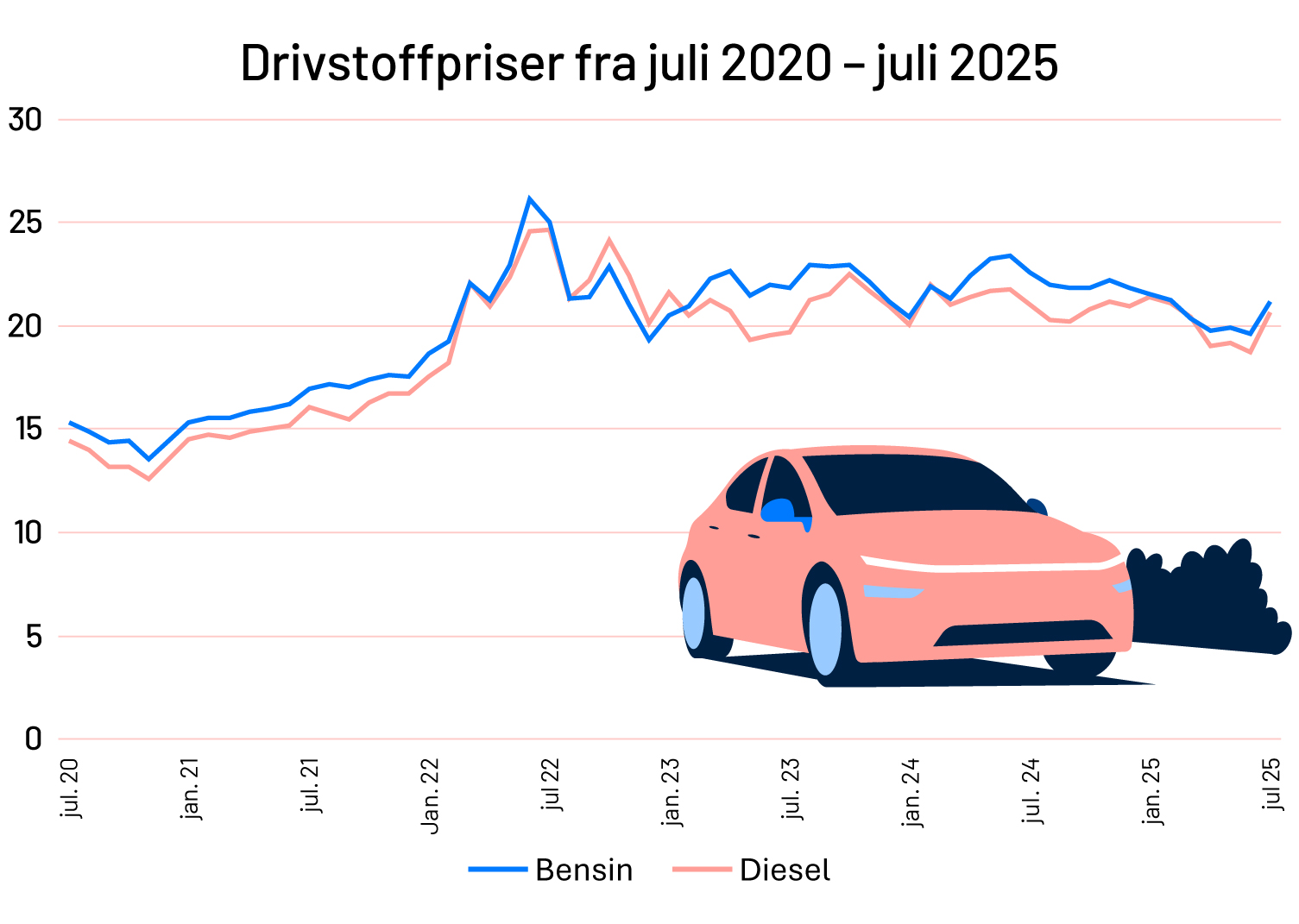
Fuel prices skyrocketed in 2022 and have since stabilized at a high level.
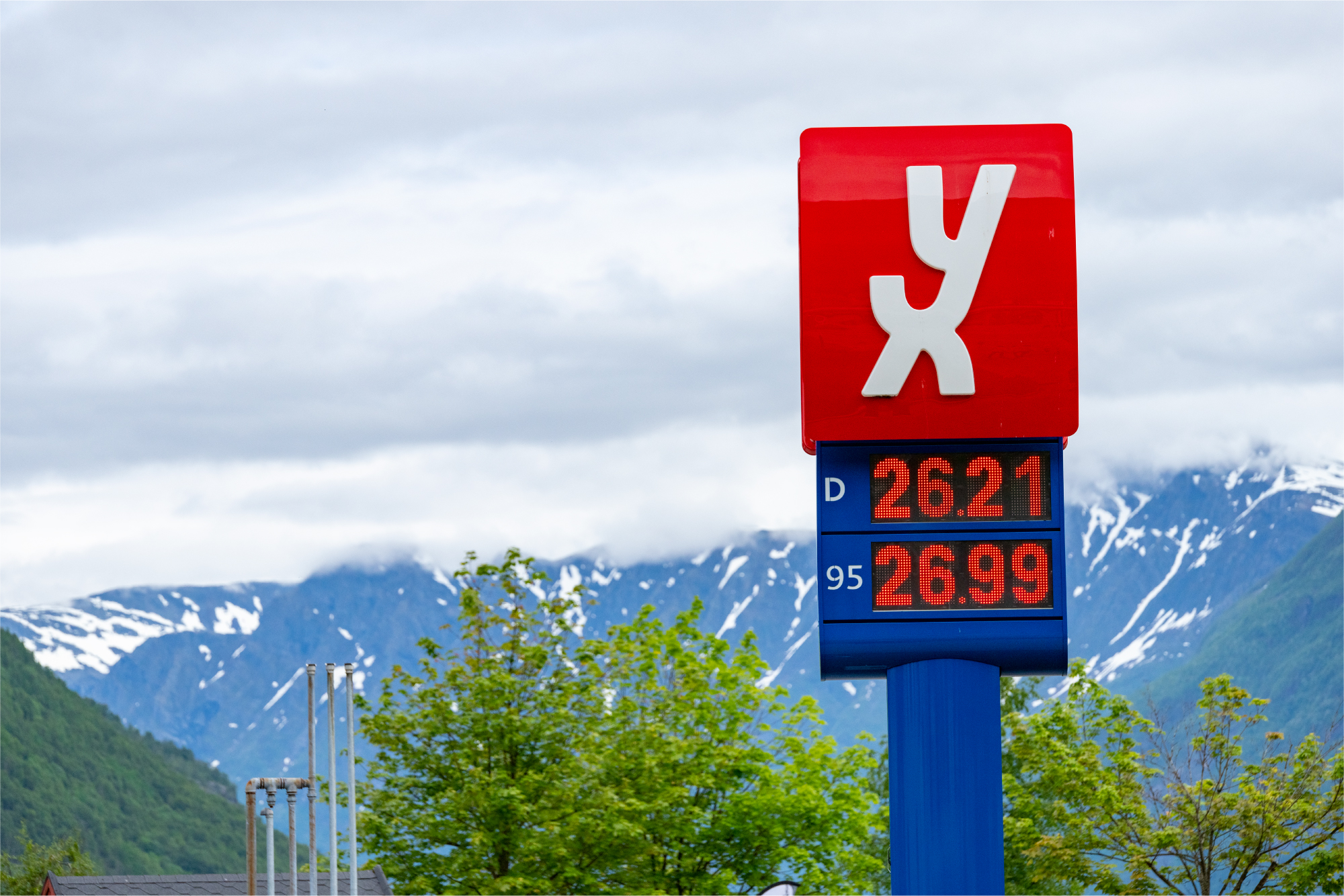
Gasoline and diesel prices have stabilized at a high level in recent years. After Russia's invasion of Ukraine in 2022, fuel prices skyrocketed, and in June of that year, a liter of gasoline cost over 27 kroner.
Although prices have since decreased somewhat, they are still often above 20 kroner per liter – something that is clearly felt in the everyday economy for people who depend on their car.
From July 2020 to July this year, fuel prices have risen by 38 percent for gasoline and 44 percent for diesel, respectively.
This affects fuel prices
Fuel prices in Norway are determined by three main components: taxes, international purchase price, and companies' own costs and margins. These factors are influenced by both political decisions and market conditions.
A significant part of the fuel price is made up of taxes, including CO₂ tax, road tax and VAT.
For example, in 2025 the CO₂ tax for petrol is 3.25 NOK/litre and for diesel 3.79 NOK/litre. The road tax is 4.16 NOK/litre for petrol and 2.69 NOK/litre for diesel. In addition, VAT is added on top of these amounts. These taxes are politically determined and can be changed through budget decisions and political decisions.
The international purchase price is affected by supply and demand on the world market, crude oil prices, refining capacity and exchange rates, especially the dollar exchange rate. For example, in the spring of 2022, uncertainty in the international market, such as the war in Ukraine, led to low crude oil prices and a high dollar exchange rate, which resulted in higher purchase prices for fuel. These prices are determined on international exchanges and affect what Norwegian companies pay for fuel products.
The companies' own costs and margins cover expenses for selling fuel, such as transportation, terminal operations, maintenance, administration and marketing. The costs can vary between companies and are affected by logistics, competition and operating conditions, while the margins are determined by market strategy and the competitive situation.
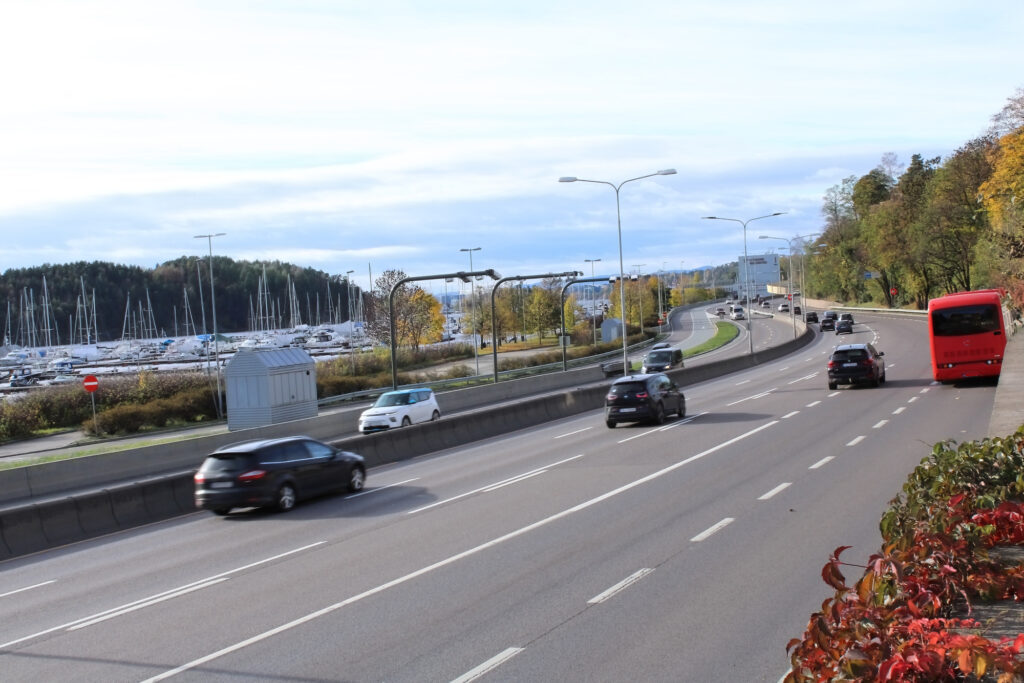
Fuel prices have become significantly more expensive for Norwegian drivers over the last five years.
Local and weekly price differences
Fuel prices are not uniform in Norway. Prices can vary significantly between regions, counties, cities and towns – and even within a limited area. The main reason is local competition between gas stations, which can lead to price wars and ongoing adjustments to pump prices.
A survey by the Norwegian Competition Authority shows that there are fewer price increases during the course of a week than before. At the same time, there is a greater difference between the highest and lowest price during the week.
The survey also shows that price increases now often occur later in the day than in the past, and that there is greater variation in when the different chains set prices at their stations. This may indicate that it has become more difficult to implement national price increases, which may be an advantage for consumers.
Shock price of fuel
As if today's high prices weren't enough, petrol and diesel could become even more expensive from 2027. At that time, fuel filled at the pumps will be covered by the EU's new emissions trading system, ETS2. This means that fuel suppliers will either have to reduce their emissions or buy climate allowances to compensate. Norway is obliged to implement the scheme through the EEA agreement.
It is currently uncertain how high this new cost will be, but many fear that it will be passed on to consumers.
Ingunn Handagard, press manager at NAF, believes it is unreasonable to place the entire burden on those who still drive gasoline and diesel cars.
– We cannot accept sky-high fuel prices. The vast majority of people in Norway buy electric cars when they switch to a brand new car. Sending such an extra bill to those who still drive petrol and diesel cars is deeply problematic. We see here that families with children and people in rural areas may be hit hardest by increased car taxes, she says.
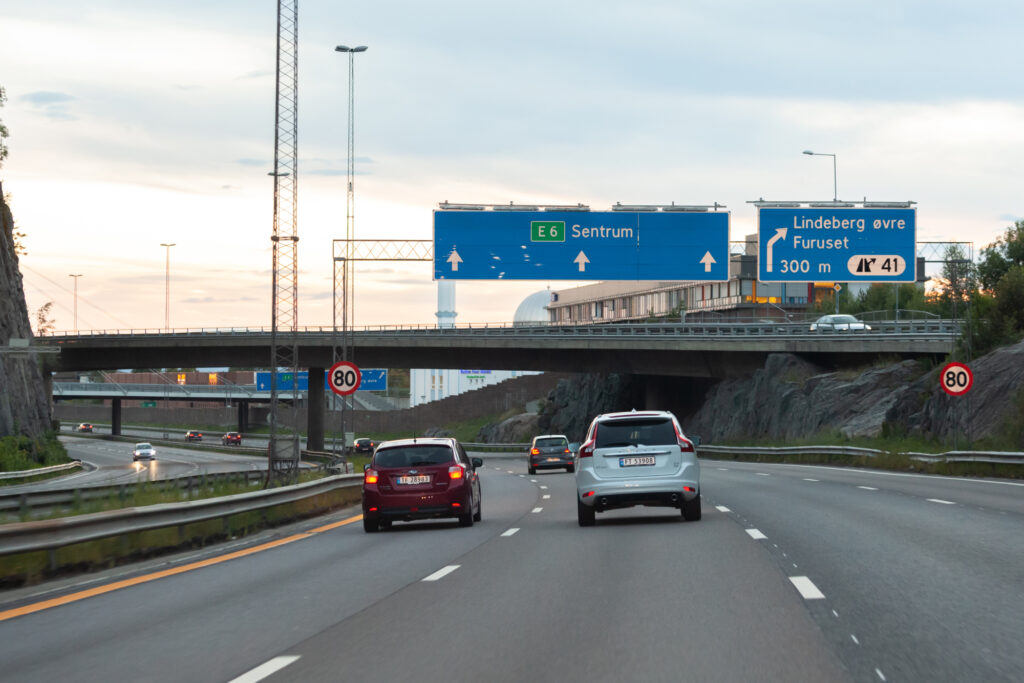
In the coming years, Norwegian drivers may have to pay more to fill up their tanks.
Political decisions
Although international conditions and market forces affect fuel prices, it is ultimately political decisions that determine the taxes – and thus how expensive it actually is to fill up the tank in Norway. The authorities have great influence through both taxes, fees and climate requirements, and can thereby ease or increase the burden on motorists.
The discussion about fuel prices is therefore not only about the market, but also about political priorities. How much the state should collect in taxes, and how the burden should be distributed between urban and rural areas, electric and fossil-fueled drivers, are questions that are decided in the Storting.
Never before have Norwegians paid more in tolls than now. In 2024 alone, NOK 15.8 billion was collected – more than ever before. At the same time, the number of toll stations and the level of rates continue to grow.
Keeping to the speed limit is important. If you're behind the wheel in summer traffic, remember: Slow speed is not always safe speed. Contributing to good flow is contributing to fewer accidents.
New figures from Trygg Trafikk show that fatal accidents on Norwegian roads continue to decline. It is a development that the entire Norwegian Traffic Department has been working on for a long time, and it is going in the right direction. But instead of breathing a sigh of relief, this is perhaps the time to ask: What is it that actually works?